 |
Description |
|
|
|
|
Standard Gauge |
|
|
Railcars |
|
|
 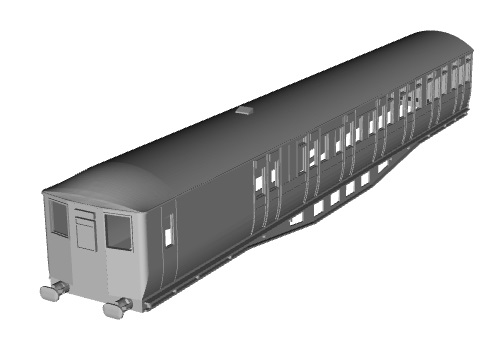
2SL and 2WIM 3rd rail EMU(ex LBSCR overhead
powered)
The LBSCR introduced EMUs using overhead power, but when the Southern
Railway took control, they standardised on 3rd rail, so the LBSCR units
were converted. Pairs of end cars were put in sets , each end having the
original lower roof, making them very different to other EMUs on the
railway. Designated 2SL, they spent most of their life on the South London
lines.
The original first class trailer coaches were converted into motor and trailer pairs, similar, but no lower roof. These were designated 2WIM, and ran on the Croydon to Wimbledon line.
They lasted till the mid 50s.
|
Details
of models available
|
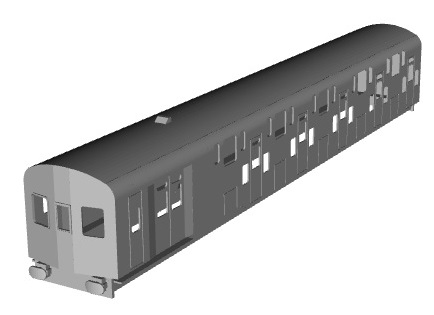
Bulleid 4DD EMU
Conceived by Oliver Bulleid for the Southern Railway's commuter route from London Charing Cross to Dartford, the two 4DD electric multiple units were the only double-deck trains to run on the main line railway network in Britain.
Driving motor car 13003 is now in the care of Bulleid 4-DD Double Deck EMU Group, which plans to restore.
|
Details
of models available
|
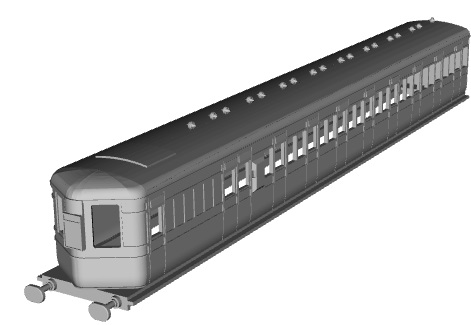
SR(exLSWR) rebuilt 3SUB EMU
Originally built by the LSWR, converting loco hauled coaches with distinctive torpedo shaped cabs . They were an immediate success, and the SR then rebuilt the bodies on longer chasis to handle more passengers. They normally ran as 3 car units(3SUB) but an extra coach could be insered (4SUB). In this state they survived into BR days.
Driving motor brake third coach
Driving motor brake composite coach
Trailer(centre) composite coach
requires chassis, bogies and finishing
|
Details
of models available
|

SR 4COR 'Nelson' EMU coach set
SR 4RES 'Nelson' EMU coach set
SR 4BUF 'Nelson' EMU coach set
In 1937 the SR introduced their 12car fully corridor emu trains on the newly electrified Portsmouth line. The name 'Nelson' resulted from the non drivers front window being replaced by destination screen, as corridor door was in centre.
Sets of 4COR and 4RES made up the Portmouth trains.
In 1938 similar trains were introduced on the Mid Sussex line, with buffet car relacing restaurant, in set 4BUF.
In 1962 3 of the 4RES sets had their restauant car fully refurbished in BR Mk 1 coach style as a griddle car.
These electric trains were finally withdrawn from service in 1972.
4COR sets composed of a DMBT,TCK,TTK and DMBT
4RES sets composed of a DMBT,THRK,TRT, and DMBT
4BUF sets composed of a DMBT,TCK,TRBufK,and DMBT
Griddle sets composed of DMBT,TFK,TRGriK, and DMBT
Requires chassis, bogies, wheels etc and finishing.
|
Details
of models available
|

Southern Railway 2-BIL EMU
The Southern Railway 2-BIL electric multiple units were built during the 1930s to work long-distance semi-fast services on the newly electrified lines from London to Eastbourne, Portsmouth and Reading. They survived in British Rail ownership long enough to be allocated TOPS Class 401.
The different batches were broadly similar, though in the first one, the driving motor brake car had a smaller brake compartment and seven full compartments, rather than six-and-a-half in the later batches.
Last set withdrawn in 1971. One set is preserved.
Requires chassis and finishing
|
Details
of models available
|

SR 6PUL 6CIT 6PAN EMU
The 6PUL sets were introduced in 1932 for the Brighton and Worthing services.
Unusually they included a Pullman Car as part of the set.
The 6CIT sets were introduced at same time as 6UL, but with tFKs instr-ead of TCK coaches.a Pullman Car was also included. Primarily aimed for business travellers.
The 6PAN sets were introduced in 1935 for the newly elctrified Eastbourne and Hastings lines.
Similar to 6PUL and 6CIT sets but with a pantry car replacing Pullman Car
6PAN sets composed of DMBT,TTK,TFRBufK,TFK, TTK and DMBT
6PUL sets composed of DMBT(52 seats) ,TTK, TFK,PulTC, TFK and DMBT(52 seat)
6CIT(sets 3041,3042) composed of DMBT(56 seats) ,TTK, TFK,PulTC, TFK and DMBT(52 seat)
6CIT(set 3043) composed of DMBT(52 seats) ,TTK, TCK,PulTC, TCK and DMBT(52 seat)
Requires finishing off, wheels etc
|
Details
of models available
|
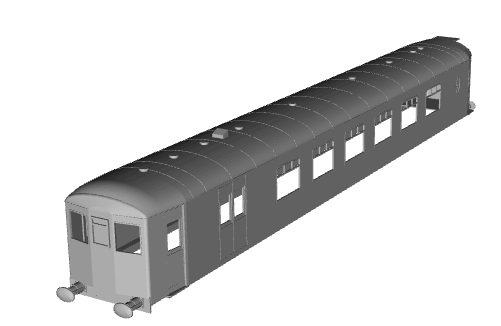
SR 5BEL Brighton Belle EMU
Driving Motor Brake Third (pulDMBT)
Pullman Trailer Third (pulTTL)
Pullman Trailer First with Kitchen (pulTFK)
One of the most famous luxury electric trains in UK, introduced in 1931/2 to run between London and Brighton.
Continued in operation up till 1972
Each 5 car set composed of
Motor Brake Third (PulDMBT)
Parlour Third(PulTTL)
Kitchen First (PulTFK)
Kitchen First (PulTFK)
Motor Brake Third (PulDMBT)
Requires finishing off, wheels etc
|
Details
of models available
|
|


Southern Railway 4SUB(both batches) EMU (class 405)
During 1940s the SR introduced a new welded steel 4-car suburban unit with curved sides, seating six passengers across rather than the normal five.
The later batches introduced at end of WW2 had slab fronts. They continued to be built into BR days, and survived up till 1980s. Designated class 405 under TOPS.
Used on the London suburban services of all three divisions of BR (S).
Unit number 4732, formed of DMBTO 12795, TT 10239, TTO 12354 and DMBTO 12796 is preserved
First batch
Driver motor brake 3rd
Trailer third
Trailer Composite(later all 3rd)
Later batch
Driver motor brake 3rd
Trailer third
Trailer third(9 compartment)
Requires chassis and finishing
|
Details
of models available
|
|

SR Sentinel Cammell steam railbus
Sentinel Cammell standard guage railbus built by the Southern Railway in 1932 to operate the steep climbing branch line up to High Dyke from Hove. It was not very successful, but still interesting.
The torpedo shape was very much in the spirit of the 1930s.
|
Details
of models available
|

Drewry Railcar no 5
This larger Drewry railcar was built for the SR(built 1928 - works No 1650),
then bought second-hand in 1934 by the WCPR from the Southern Railway (where the number 5 originated), and was 4-wheeled and
petrol-engined.
|
Details
of models available
|

LSWR Drummonds 'The Bug' inspection railcar
Class F9 - 58S - Drummond LSWR Class F9 4-2-4T Inspection Car - built
1899 by Nine Elms Works as LSWR No.733 - 1924 to SR No.58S - 1940
withdrawn - known as 'The Bug' or 'Drummond's Wee Thing' - little used in
SR days.
|
Details
of models available
|

LSWR H13 Steam Railmotor
Numbers 3 to 9
numbers 10 and 11 (corridor end fitted)
numbers 12 to 15
Originally introduced in 1906.A development of the two H12 class railmotors.
Around about 1919 the LSWR converted 12 of its H13 railmotors into 2 car pushpull brake composites, and one into a trailer third.
None were converted from wire control to air-control by the Southern Railway, so they wre then used as conventional stock not pushpull, and some survived into mid 1950s, ranging far and wide.
None are preserved.
Requires chassis, bogies etc.
|
Details
of models available
|
|
Coaches
|
|
|

SR (ex
SECR steam railmotor) push pull and articulated coaches
These coaches were originally built by the SECR as steam railmotors, but in the 1920s, they were converted into 2 pairs of push-pull coaches and 2 sets of non push-pull
articulated coaches. They lasted in this state till the 1950s.
One coach in each set had its luggage/guard section converted to passenger use, initially 1st class in the push pull
sets |
Details
of models available
|
|

SECR 6 wheel push pull coach set
The SECR built these push pull sets using existing 6 wheel coaches, they had inherited from the LCDR. There were many
variations, but this 3 coach set was more common and 'standard' than others.
They survived into the 20s on the Southern Railway, being used at both ends of the SECR territory.
Originally P class locos were used but others were also used.
The set composed a 5 compartment third class a 4 compartment first with one third class compartment, and a 3 compartment brake third coach with driver compartment.
|
Details
of models available
|
|

LSWR push pull vestibule coaches(Plymouth)
Pushpull coaches (diagram 136), to work w ith additional coach(diagram 25) , first introduced in 1906. Built to a similar style as the main batch of steam railmotors(H13). Originally designed to be pulled by the small C14 loco, itself based on the
railmotor, and found to be underpowered , as was its replacement the S14 . Eventually the O2 0-4-4T as used, and these coaches mainly operated in the
Plymouth area.
Converted from wire control to air-control by the Southern Railway, with a modified driving cab end, they eventually were
withdrawn from service in 1939. |
Details
of models available
|

LSWR push pull vestibule coaches(D414/27)
LSWR push pull vestibule coaches(diagram 1414/129), to work ith addition coach(diagram 27) , first introduced in 1906. Built as steam railmotors(H13). Converted to open vestibule pushpull coaches from 1914.
Converted from wire control to air-control by the Southern Railway, with a modified driving cab end, they eventually were
withdrawn from service by 1960.
None are preserved. |
Details
of models available
|

LSWR diagram 415 vestibule pushpull coach
LSWR diagram 29 pushpull trailer coach
Around about 1919 the LSWR converted 12 of its H13 railmotors into 2 car pushpull brake composites, and one into a trailer third.
None were converted from wire control to air-control by the Southern Railway, so they wre then used as conventional stock not pushpull, and some survived into mid 1950s, ranging far and wide.
None are preserved. |
Details
of models available
|
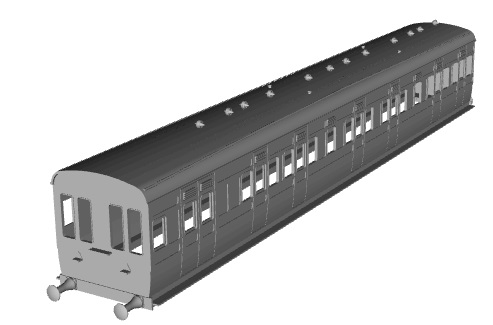
SR/LSWR 56ft and 58ft push pull coaches
converted from various ex LSWR 56ft and 58ft(ex 48ft) coaces into push pull coaches during 1930s |
Details
of models available
|
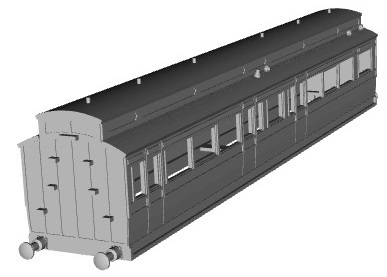
LSWR Royal Saloon carriage no 17
Built with Arc roof, rebuilt as Royal Saloon with Clerestory, and then rebuilt as Picnic Saloon and run in this form from 1913 till 1931, then formed part of a bungalow at Chiltington.
Fully restored as part of Ch 4 TV program.
Requires chassis, bogies etc. |
Details
of models available
|
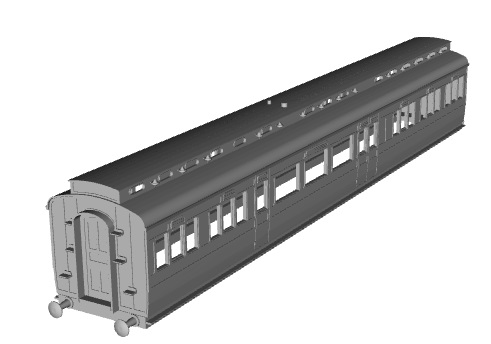
LSWR dining saloon coach diag 1319/1869
Originally introduced in 1907.Early versions had small windows, this batch had larger windows.
Rebuilt without clerestory roofs in 1930s by SR. Some converted into ambulance coaches during WW2. One of these ended up as a camping coach. Others ended up in departmental military service, and 2 are currently awaiting restoration. |
Details
of models available
|
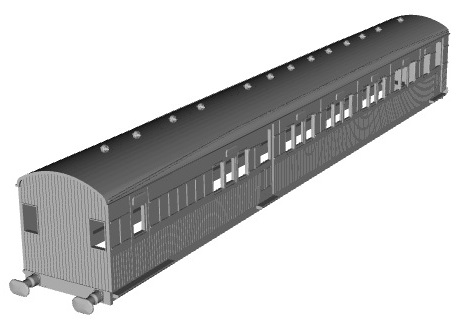
SECR continental coaches
Originally planned in 1913, but delayed by WW1, these large coaches were eventually approved in 1919 and introduced in 1921.They had Pullman gangways, buckeye couplings and retractable buffers so they could run with Pullman coaches. Brake coaches did not have a gang-way at brake ends.
More coaches were built by the Southern Railway, and the brake coaches had extra guards doors fitted, and during and after WW2 coaches were used in other trains, so an odd one in amongst other Southern coaches would not look out of place.
Finally withdrawn at the end of the 50s when the lines to the coast were electrified.
Requires chassis, bogies, wheels etc and finishing. |
Details
of models available
|
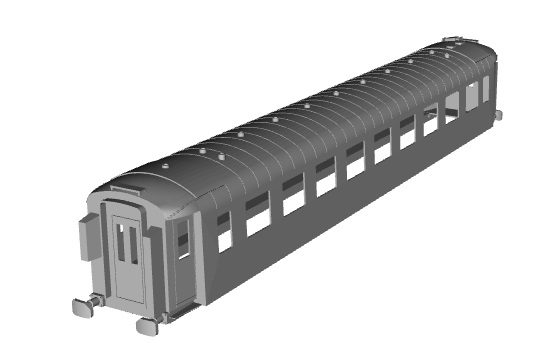
SR/SNCF Night Ferry Coaches and Vans
The Night Ferry was an international boat train from London Victoria to Paris Gare du Nord that crossed the English Channel on a train ferry. It ran from 1936 until 1980, with a break from 1939-47.
Sleeping coaches were based on continental designs, reduced in size to fit British loading gauge.
Requires finishing, chassis and wheels. |
Details
of models available
|

SR Pullman Observation Coach
Devon Belle
no 13/14
two Pullman coaches rebuilt as observation coaches for the start of the Devon Belle in 1947.
Transferred to London Midland Region in 1954, losing Pullman colours
No 13 now preserved on Dartmouth Railway
No 14 now preserved on Swanage Railway after spell in USA
Requires bogies,chassis and finishing |
Details
of models available
|

Maunsell d2654 general saloon brake coach
20 of these were introduced in 1930s for Continental boat traffic, but could be found in other specialist trains. Useful as not allocated into sets.
Requires bogies, wheels etc and finishing.
|
Details
of models available
|
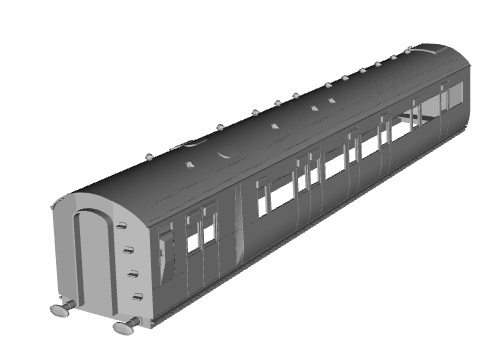
Maunsell Low Window Corridor Coaches
Coaches introduced in 1920s for Southern Railway, following on from low
window versions.
|
Details
of models available
|
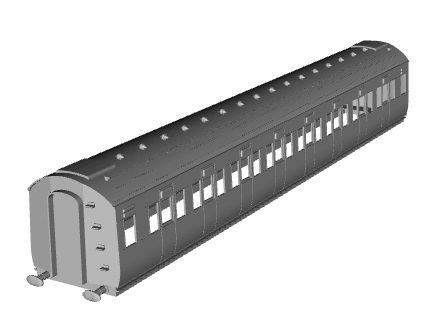
Maunsell High Window Corridor Coaches
Coaches introduced in 1920s for Southern Railway, following on from low
window versions.
|
Details
of models available
|
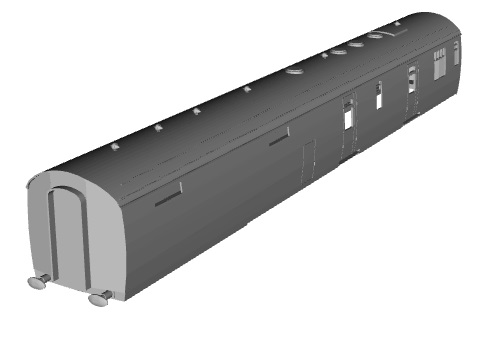
Maunsell and Bulleid Restaurant coaches
Introduced from 1927. Kitchen/Buffet and restaurant/diner coaches
including Tavern Car
|
Details
of models available
|
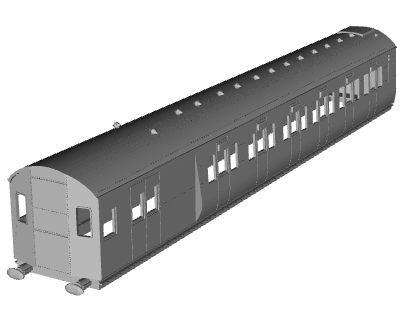
Maunsell pushpull coaches
Some Maunsell coaches were converted into push pull driver and trailer coaches in 1950s, after older stock was withdrawn because it was over 30 years old.
|
Details
of models available
|

SR Isle of Wight 4 wheel push pull coaches(ex LCDR conversions)
Four ex LCDR 6 wheel coaches were conveted for use on the Isle of Sheppey line, but then transferred to the Isle of Wight when the ex railmotor coaches became available. The were converted into 4 wheelers, as 2 pairs for push pull operation. In 19289 an extra gangway connection was added to loco end, possibly with intension of addin exta coaches They wre used up till 1938 when other coaches replaced them, but the bodies survived, |
Details
of models available
|
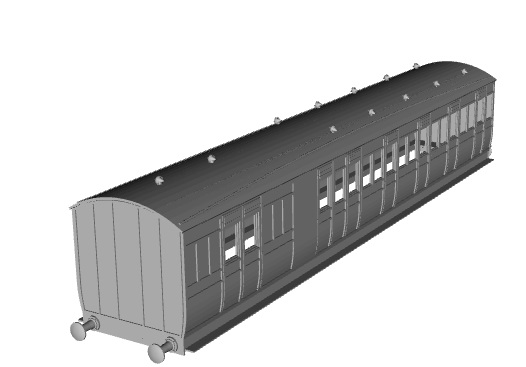
SR Isle of Wight ex LCDR Bogie Coaches
Transferred to IOW during 1920s and 1930s, many continued in use till
end of steam
|
Details
of models available
|
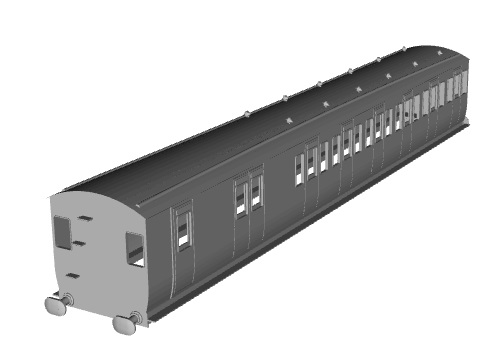
SR Isle of Wight ex LBSCR Bogie Coaches
Transferred to IOW during 1920s and 1930s, many continued in use till
end of steam. |
Details
of models available
|

SECR D147 Brake 3rd coach
The SECR introduced new coaches to replace older ones.This 50ft long one was built about 1905, and some were used in 3 car sets but many ran as singles. One of these was used on KESR during final years of BR running.
Requires chassis, bogies, wheels etc and finishing. |
Details
of models available
|
|

SECR 2311/2322 Bogie Coach sets
The SECR introduced new coaches to replace older ones.These 54ft long ones were built about 1910/11. They were used in 3 car sets but in 1940s many were modified and transferred to Isle of Wight, and lasted till end of steam on the island. IOW brake coaches had birdcage removed, and lavatories converted into part of a saloon compartment.
One set found its way to Longmoor Military Railway in 1943. The non brake coach became damaged so was scrapped but the other two brake coahes continued running up till end of the in 1969 and are now preservd on KESR.
Modified versions of brake composite and non brake composite coaches have been preserved n IOW.
Requires chassis, bogies, wheels etc and finishing.
|
Details
of models available
|
|

LBSCR D434 435 Driving Brake Composite Coaches
In 1909/11 the LBSCR started to build push pull/motor coaches from stretched 6 wheel coaches fitted to new 54ft bogie chassis.
The two extra compartments were 1st class, making these the first composite
coaches used in pushpull mode.
Some were used in pairs with loco in between.
Later more coaches were converted from other older stock and 2 coach pushpull sets created.
In SR days electrification of some ex LBSCR routes reduced need for some of these , so they started to be used on non LBSCR lines. Driver ends were also modified by removing/plating over
paneling on fronts, and in this condition some continued in service till end of 1950s .
Position of roof vents varied from coach to coach, some had none, so these can be added
by modeller.
Requires wheels etc and finishing. |
Details
of models available
|

SECR diagram 52 60ft all third coach
Introduced between 1918 and 1923, as part of plans for electrification, but coaches ended up being steam haled til withdrawn in early 1960s.
Basic but found to be good 'people carriers' so used in all area of Southern, not just ex SECR.
Requires chassis, bogies etc. |
Details
of models available
|
