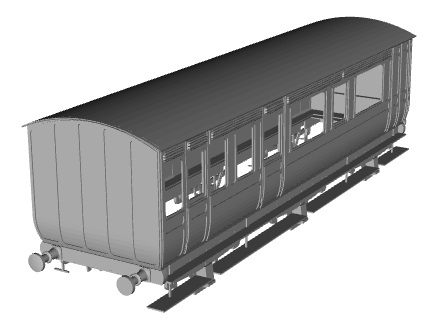
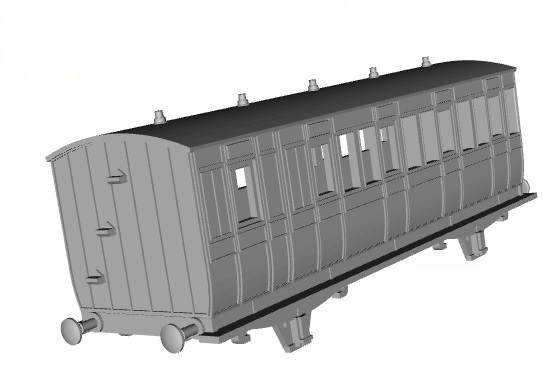
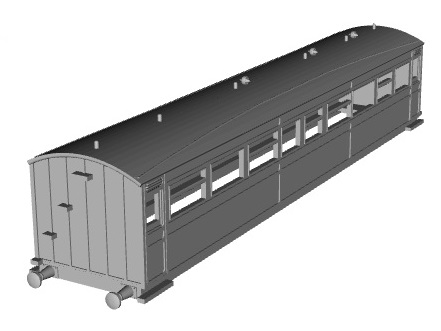
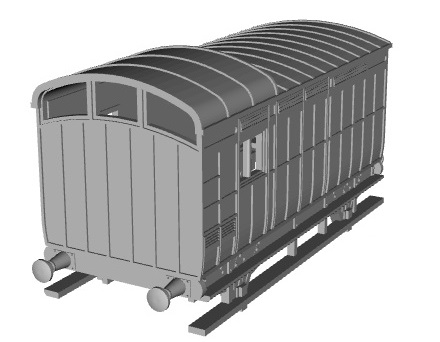
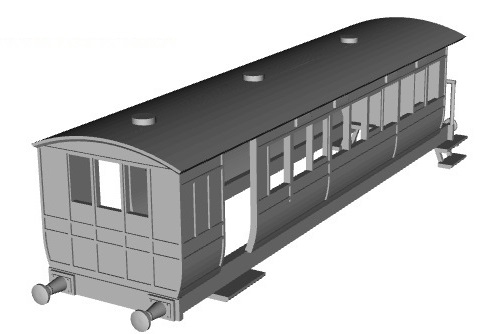
3D Printed standard gauge passenger stock 

(Light Railways and metro Systems)

Passenger stock including EMUs, DMUs and steam railmotors. 


London Transport(Circle/District Line) London Transport(Metropolitan Line)      
Metropolitan Railway Jubilee Coaches Metropolitan Railway 8 wheel  Coaches Metropolitan Railway Ashbury Bogie  Coaches    
Metropolitan Railway Dreadnought Coaches Metropolitan Railway MV/MW/T electric stock Metropolitan Railway 1904/5/13/19/21/25 electric stock Metropolitan Railway Non Passenger Coaches  
Metropolitan Railway Saloon Coaches Metropolitan Railway Pullman Cars Metropolitan Railway 4 wheel coaches Metropolitan Railway/MDR Experimental Motor Coach  
Wotton/BrillTramway Coach Brill(Oxford Alyesbury) Tramway Coach      
District Railway LTSR Ealing Coaches London trams Victoria Line Trains Light Rail Vehicle  
Mersey Railway Liverpool Overhead      
KESR Steam Railcar Wolseley Railcar Ford Railmotors and lorry Shefflex Railcars
S&MR Gazelle coaches Royal Saloon coaches(S&MR,KESR) KESR Pickering bogie coaches KESR/NLR luggage brake coach  
Selsey Tramway bogie coaches        
WCPR Bogie Coaches WCPR (ex GER) brake coach WCPR Small Railcar WCPR Large Railcar  
Bishops Castle Railway (ex H&B) third brake (converted) Derwent Valley LR Ford railcars North Sunderland Railway    
Drewry bogie motor coaches Drewry type B railcar Spurn Head Railway Hudswell Clarke railcar Jersey Sentinel Railcars  
Garstang & Knott End  coaches Corringham Light Railway coaches Mid Suffolk Light Railway (ex Met Jubilee Coaches) Ex GER coaches transferred to various light railways  
Description
   
Standard Gauge  
Railcars  

London Transport Circle and District Line stock


Details of models available

   Details of models available

London Underground Trains

Details of models available

Light Rail Vehicle

Details of models available

Liverpool Overhead Railway

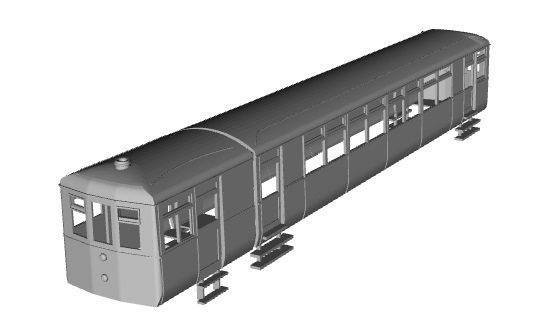
The Liverpool Overhead Railway (known locally as the Dockers' Umbrella) was an overhead railway in Liverpool which operated along the Liverpool Docks and opened in 1893 with lightweight electric multiple units
Originally run with two coach trains, each coach being 45ft long. The second batch were only 40ft long, but an additional centre coach of 32ft was included. Various modifications were done over the years. Some were modified with new bodywork in the 1940s.

The whole line was closed in 1956, mainly due to the bad condition of some of the viaducts. 

One original coach is preserved, and on view in the local museum. One of the 1940s modified centre trailer coaches is awaiting restoration.


Details of models available


Mersey  Railway

In 1903 24 motor cars and 33 trailers were provided by Westinghouse to run on the Mersey Railway. The stock was of an American design, with a clerestory roof and open gated ends. Unheated accommodation was in saloons and the wooden bodies were British built, and the bogies had been made by Baldwin .
The open ends were then modified, and dving compartments were built at one end of trailer coaches. In this form some survived till the 1950s when they were replaced by BR built versions of the LMS class 50s EMUs. 

Details of models available
 

WCPR Railway 

Col. Stephens was a pioneer of petrol traction. The WC&PR was the first of his railways to introduce railcars. The first was bought new in 1921 from the Drewry Car Co Ltd to Col Stephens’ specification - works no 1252. It seated 30 with 12 standing, and due to low running costs was relatively profitable. Luggage could be stored on the roof 

A matching trailer seating 24 was bought in 1923 from Drewry (works No 1323). The trailer originally had waterproof curtains rather than glazing.

Details of models available
 

Not the fifth railcar but the only other one! This larger Drewry railcar was bought second-hand in 1934 (built 1928 - works No 1650) from the Southern Railway (where the number 5 originated), and was 4-wheeled and petrol-engined. 

Livery was left in lined SR dark olive green, though in the final years was painted unlined mid green. 

Requires wheels, mechanism, and finishing off

Details of models available

KESR Pickering Steam Railcar

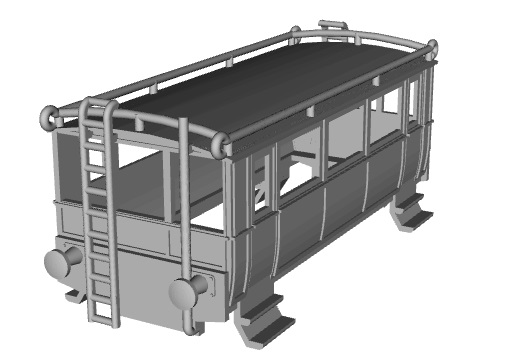
This steam railcar was built for the Kent and East Sussex Railway(one of Colonal Stephens lines) in 1905, by R & Y Pickering of Wishaw near Glasgow. 

Requires wheels,chassis ,interior

Details of models available
 

  Coaches for Gazelle on Shropshire and Montgomery Railway
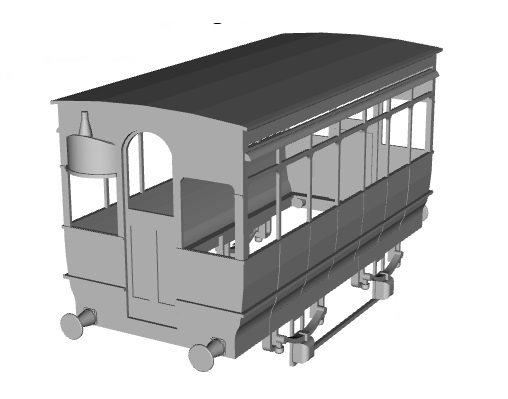
The first coach used with Gazelle on the Shropshire and Montgomery Railway was converted from an old LCC horse drawn tramcar, mounted on railway wheels. 
Survived up till 1930s,when replaced by a second coach, converted from a Wolseley railcar. 

Requires wheels,chassis etc

Details of models available

Wolseley Railcar

Col. Stephens had a number of railcars built, starting with this Wolseley based railcar, intiallt for the selsey Tramway, then the Shopshire and Montgomery Railway. It was a ruin by the time it reached the S&M, and its body was used on the original chassis for the coach for Gazelle. 


Requires wheels,chassis etc

Details of models available

Royal Saloon Coaches (S&MR,KESR)

Amongst the varied selection of rolling stock acquired by Colonel Stephens for his lines were two carriages originally built by the London and South Western Railway for the use of the Royal Family. These carriages were of considerable historical importance and appear to have been purchased for the Colonel's personal use as inspection saloons on the Shropshire and Montgomeryshire and the Kent and East Sussex Light Railways. 

Requires wheels,chassis ,interior

Details of models available
 

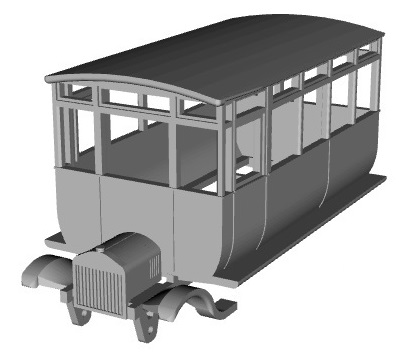
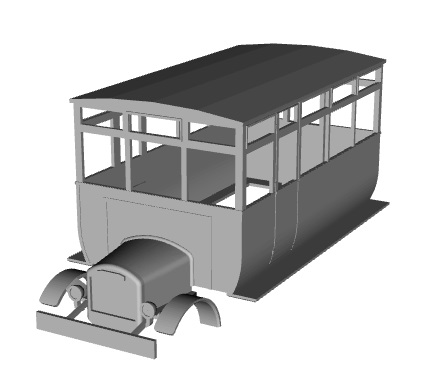
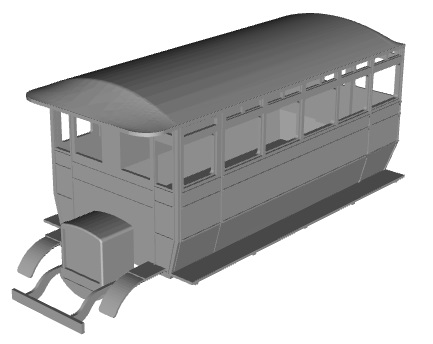
Ford rail lorry and railmotors

The lorry was bought as a standard 1 ton Ford Model T lorry by Colonel Stephens for use on his railways. Initially used on the West Sussex Railway(Selsey Tramway) and then transferred to the Sropshire and Montgomery Railway. 

The second batch of Ford railmotors was introduced by Colonel Stephens on the KESR and S&MR. Based on a chassis of the 1 ton Model T Ford. 

A separate baggage wagon was built for he railmotors, normally in-between. Initially on WS then transferred to S&MR and used with Gazelle.


Standard gauge, but could be modified to run on narrow gauge. 

Requires wheels, motor and finishing

Details of models available


Selsey and KESR Sheffex Railcars

Introduced in 1928 . An improvement on the Ford railcars. 
Used in pairs, sometimes with open luggage truck.

After successful trials in Sussex, a second par were ordered for KESR. As bus regulations had changed allowing larger buses on existing chassis, the new railbus bodies were also bigger. 
Used in pairs, sometimes with open luggage truck. 
Continued to run till 1939, when they were scrapped.


Requires finishing off, wheels etc


Details of models available

Wotton Tramway(Brill) Ashbury coach

Supplied by Ashbury for the opening of the privately owned and built Wotton Tramway in 1872. The line ran from Brill to Quainton Road station and from 1899 became part of the Metropolitan Railway after the schemes to extend the line to Oxford failed. 
The body of this coach ended up as a workmans' hut at Brill station and survived till closure of the line in 1935. 

Requires finishing off, wheels etc

Details of models available
 

Brill Tramway(Oxford and Aylesbury) coach

Two supplied by Bristol Carriage and Wagon Company in 1895 for the planned extension of the Brill Tramway. As this extension was never completed they were sold to the Llanelly and Mynydd Mawr Railway when The Metropolitan Railway took over in 1899.


Requires finishing off, wheels etc

Details of models available

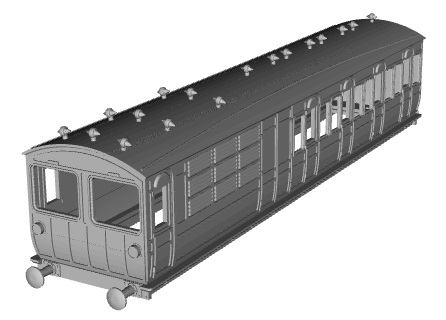
Metropolitan Railway Jubilee coach

All 3rd class, Brake 3rd, Brake 2nd, Saloon(converted brake 2nd) , 
All 1st


Built for the Metropolitan Railway at the time of Queen Victoria's silver jubilee, to replace rigid 8 wheel coaches , which had been proving troublesome on the Circle line. Originally built with a short 14ft wheelbase, when additional coaches were built for the 'mainline', this had to be increased to improve ride quality. 
They were run in close coupled sets.
Eventually these short coaches were replaced with longer bogie coaches, and many were sold to other railways. 
The Mid Suffolk Railway,Nidd Valley Railway and WCPR bought some. Modifications to the coaches were made on both the Mid Suffolk and WCPR. 

The coaches on the Mid Suffolk were replaced when the line was taken over by the LNER, the others lasted till those lines closed. One First class coach body survived on the WCPR and has been restored to near original condition with a new chassis. 

Requires wheels and finishing. 

Details of models available
 

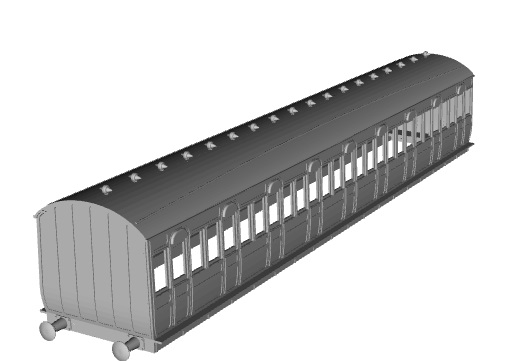
Metropolitan 8 wheel coaches

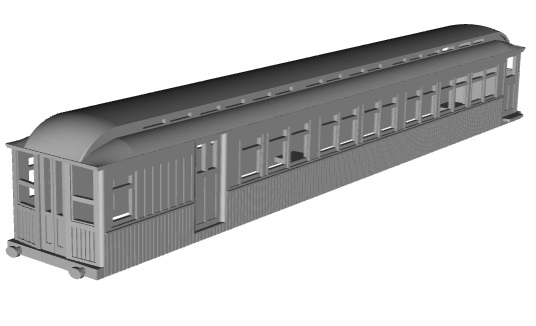
When the Metropolitan Railway required coaches , having fallen out with the GWR, it introduced its own very similar 8 wheel(non bogie) coaches. The first 92 had square topped doors, but after that doors were round topped. 
With modernisation into the 20th century, some of these 8 wheelers were extensively rebuilt into bogie coaches, and most of the rest had minor modifications . However many were sold off , including a batch to a French railway, which actually ran up till 1964, and some to the Isle of Wight Railway. The IOW ones were mainly of the semi modified version, and continued in use up till the 1930s. The Met also retained some for departmental use and some were used on the Brill branch .

Requires wheels and finishing. 

Details of models available

Metropolitan Railway 4 wheel coaches
2nd/3rd class
1st class
milk van
originally part of a twin set introduced in 1869 supplied by Oldbury Carriage Company. 
11 first class, 9 second class and 4 third class. 
They were in effect half sized versions of the 8 wheel carriages.
Originally connected permanently with centre buffer. These were replaced with conventional buffers and sets split up from 1879. 
In servivce they wre used to test out various innovations. Fitted with low pressure gas reservoirs on roof originally.
None survived into electric era apart from six first class coaches converted into milk vans. 
Light weight and poor running resulted in single carriages and the milk vans always being positions inside sets of 8 wheel coaches.
The milk vans were scrapped in 1900 when new vans were introduced.

Details of models available
 

Metropolitan Railway Ashbury Bogie Coaches

With increased demand the Metropolitan Railway introduced new bogie coaches, based on the upgraded Jubilee coaches. With improved fittings they were popular, and it was not long before the Met started the conversion over to electric propulsion,initially with separate locos, then converting some brake thirds to motor coaches. Some all seconds/thirds were also converted into driving trailers. 
Eventually all the brake coaches were either converted into motor coaches(2 variations) or all thirds. 
With new trains being introduced their days were numbered and most were withdrawn in 1920s/30s. 
Six coaches were converted back to steam haulage for 2 pushpull sets to run on the Chesham branch. These survived up till 1960 electrification, and 4 are now on the Bluebell Railway(subsequent restored/converted back into older style), and one trailer is preserved at LT museum. 


Requires bogies chassis wheels and finishing

Details of models available

Metropolitan Railway/MDR Experimental motor coach

Two built by Brown Marshall in 1899 for use between Earls Court and High Street, Kensington . Foutr trailer coaches similar to the existing bogie coaches completed the set.
The motor coaches had bigger wheels necessitating the bodies to be cut away along sides above the bogies. 
Trial ran until November 1900,and the set split between the two railways. The Met trailer coaches were absorbed into the other bogie coach sets. The motor coach was either scrapped or used as part of another bogie wagon. Nothing is known about the MDR coaches. 

Requires finishing off, wheels etc

Details of models available


Metropolitan Railway Dreadnought coaches

Competition with the Great Central Railway on outer suburban services on the extension line saw the introduction of more comfortable Dreadnought Stock carriages from 1910. A total of 92 of these wooden compartment carriages were built.
The design also formed the basis for the MW/MV electric stock introduced in 1920/30s. It had been planned to convert all Dreadnought coaches to electric stock, but plans to electrify complete Metropolitan line were delayed by WW2, and after the war sliding door stock was designed to replace slam door stock. 
3 examples have been preserved.

Requires finishing off, wheels etc

Details of models available

Metropolitan Railway saloon coach

Two of these 6 wheel saloon coaches built in 1895 specifically for use of Alfred Rothschild to travel to and from London from Wendover. They ran as a pair and were also available for other groups on special occasions. 
After 10 years of heavy work they showed their age and were combined into one coach on a new underframe.

The rebuilt saloon was also used to replace one of the pullman cars when out of service. Also used for special occasions and final use was on final inspection if the Brill branch before closure in 1935. It was scrapped not long after.

Details of models available

Metropolitan Railway Pullman Car

2 Pullman cars ordered in 1909 in response to the GCR planning a Pullman/luxury service to London. Smaller than traditional Pullman cars to fit restricted loading gauge of the Met. 
Named Mayflower an Galatea, after contenders for the 1886 Americas Cup.
Painted in traditional Pullman colours of umber and cream which did nor fair well, so repainted in crimson lake from 1922. 
Withdrawn in 1939 on outbreak of WW2. Bodes ended up as office/stores for a local wood merchant in Hinchley Wood and scrapped in 1948. 

Requires finishing off, wheels etc

Details of models available


Metropolitan Railway Non Passenger coaches

Various non passenger stock eas eithr built or converted from old passenger coaches.

This included Milk Vans, Full Brakes, Horse boxes and Carriage trucks, all of which could run in passenger trains.
Requires finishing off, wheels etc

Details of models available


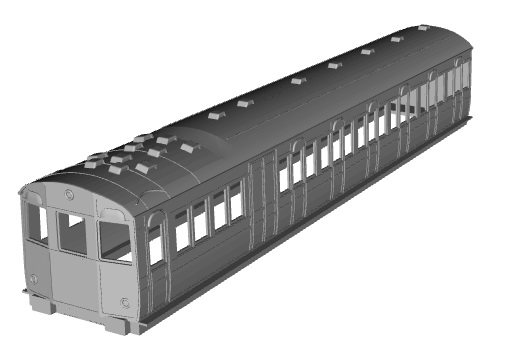
Metropolitan Railway MV/MW/T stock

The Metropolitan Railway Dreadnought coaches introduced for longer journeys proved very successful. Compartment stock was preferred over saloon stock so the design also formed the basis for the MW/MV electric stock introduced in 1920/30s. It had been planned to convert all Dreadnought coaches to electric stock, but plans to electrify complete Metropolitan line were delayed by WW2, and after the war sliding door stock was designed to replace slam door stock. 

Initially 6 motor coaches were built in 1927 with normal buffers to run with Dreadnought coaches, and were vacuum braked hence being called MV stock. The other 6 were air braked and initially ran with various air braked stock. The MV stock was eventually converted into MW stock, and once gearing was equalised between the original MV and MV coaches , trains could be composed of any air braked stock. 
The success of the initial 12 MV/MW motor coaches led to modified designs being intoduced in 1929 and 1931. London Transport started making aditional modifications to all motor coaches , replacing guard compartment with a passenger compartment to increase seating being renamed as T stock, and in this state they continued in service up to end of the 50s. 

2 motor coaches are preserved. 

Requires finishing off, wheels etc

Details of models available
 

Metropolitan 1904/5 ,1913, 1919,1921 and 1925 electric stock


The first electric multiple units ran on 1 January 1905 from Uxbridge to Baker Street. The first design had open access as ends of coaches which was not popular with passengers. These were replaced with enclosed entrances. Also having access only at ends increased time at stations so doors were added to centre of coach. 
One coach from 1905 stock  still exists, waiting to be restored. 

The 1913 stock was based on 1905 stock with elliptical roof. 

1919 stock was experimental, trying out swing doors instead of sliding doors.

1921 stock was improved version of 1913 stocjk with 3 sets of sliding doors.

1925stock was experimental to test suitability of saloon stock for longer distance routes. 


Requires finishing off, wheels etc


Details of models available
 

Bishops Castle Railway )ex H&B) converted brake third

Acquired by the Bishops Castle Railway from the Cardiff Railway who had already modified an ex Hull and Barnsley Railway all third into a brake third, with 3 half passenger compartments. 

Requires wheels and finishing.


Details of models available
 

WCPR Bogie Coaches

The first coaches on the WCPR were these distinctive bogie coaches, built by the Lancaster Railway Carriage and Wagon Co Ltd. They had been ordered by the Argentine Republic Railway, but the contract fell through. 

Requires finishing, bogies, interior and wheels. 
Two versions are available. One with basic balcony ends and one without. A 3D printed model of the ends and side doors of the balcony is available. 

Details of models available
  

KESR Pickering bogie coaches

All Third coach

Brake third coach

Brake composite coach

LMR saloon coach


Three coaches were built for the KESR in 1905. Very smart, but for some reason one(brake composite) was transferred to the East Kent Railway, and the other two(all third and a brake third) went to the Longmoor Military Railway. 
In the 1920s the LMR rebuilt their two coaches, the all third becoming an inspecton saloon with ed windows fitted, and the brake third becoming a maintenance and tool van for breakdown train. The salon was very successful, even being used to convey royalty, but the tool van was destroyed in an air raid in 1940. 

Requires bogies, wheels and finishing off

Details of models available
 

WCPR (ex GER) 4 wheel brake coach

Ex-Great Eastern Railway 4-wheeled passenger brake van. Used mostly for carrying milk churns, it overturned in a shunting accident in 1927, and wasn't used again. It was stored in a siding in Clevedon and scrapped after closure.

Requires chassis, wheels and finishing


Details of models available

Derwent Valley Light Railway Ford railcar

Ford chassis with body built by C.H.Roe of Crossgates (Leeds). Operated 1924-1926 when road bus competition saw them sold to County Donegal Railways.
They were modified by County Donegal(body lowered), to fit 3ft gauge, but were not uccessful and were scapped in the mid 30s. 

Colonel Stephens wanted to buy them, but was outbid by the County Donegal. 

Requires chassis,and finishing etc.

Details of models available
 

Drewry motor coach


Based on original 1931 proposed design for Bermuda Railway. Fitted out with buffers for British standard gauge. Short bogie underframe.


Require chassis, bogies and finishing

Details of models available
 

Spurn Head Railway Hudswell Clarke railcar

The 6th and final railcar supplied in 1933 to the War Department for operating on the Spurn Head Railway. 
It was more successful than its predecessors and continued in operation for 18 years. 

Model based on drawings and photos, some small changes were made over the years.

Requires wheels,chassis etc

Details of models available

Selsey Tramway(HMSTY) Falcon bogie coaches


Built for the opening of the Selsey line.3 coaches initially,(1 brake, 2 non brake) followed by a similar non brake coach built by Hurst Nelson.Brake coach altered over the years and good photos of original brake end are very difficult to find, so model based on available information(3 end windows) and partial views. 

Requires wheels, bogies and finishing

Details of models available

KESR ex NLR luggage brake coach no 15

Built by the NLR. Distinctive birdcage roof end. Some variations in shape and height(possibly modified). Sold to various light railways including KESR and Easingwold Railway. 

Details of models available

NLR 18ft6in luggage brake coach

Built by the NLR. Distinctive birdcage roof end. Some variations in shape and height(possibly modified). Sold to various light railways including KESR and Easingwold Railway. 

requires finishing and wheels

Details of models available
 

Drewry type B railcar

The Drewry type B railcar was first built by BSA and taken over by Drewry . First introduced in 1911, and sold to many railways around the world. Various gauges. This is a typical standard length version. Production continued up till 1930, but spare parts were still being supplied in 1958. 


Requires chassis and finishing

Details of models available

District Railway LTSR Ealing Coaches

From 1910 trains from the London, Tilbury and Southend Railway (LT&SR) were extended over the District line, the steam locomotives being exchanged for electric ones at Barking. Two rakes of carriages were provided by the London, Tilbury and Southend Railway, and were hauled over the District tracks by the locomotives working in pairs. 

Requires finishing off, wheels etc

Details of models available

Corringham Light Railway

The Corringham Light Railway was built to connect the village of Corringham to the newly built ammunitions factory at Tames Haven in Essex. Primarily for workers at factory. 
The line opened in 1901 and closed in the 1950s

Details of models available
 

Garstang and Knott End Railway Coaches

The Garstang and Knot-End Railway ran between Garstang and Pilling, in the Fylde of Lancashire. In 1898 the Knott End Railway was authorised to continue to Knott End; it opened in 1908.

Salt extraction near Preesall became a dominant industry from 1890. The passenger service was discontinued in 1930 and the line closed completely in 1965. 

Requires finishing off, wheels etc

Details of models available

North Sunderland Railway coaches

The North Sunderland Railway was a railway line in Northumberland, England.  The branch was four miles in length and a single track with standard gauge track.

After World War II lack of income precipitated closure, which took place in 1951. 

Stock was obtained from other railways, in particular the NER, and ex GER coaches were also used at the end. 

Requires finishing off, wheels etc

Details of models available

 Ex GER coaches

 transferred/sold to other railways including MSLR and Colonel Stephens 

Details of models available

Sentinel Railcars used on Jersey

Details of models available
Trams

London trams

Details of models available

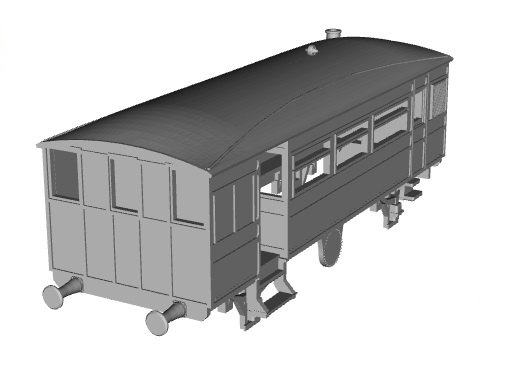
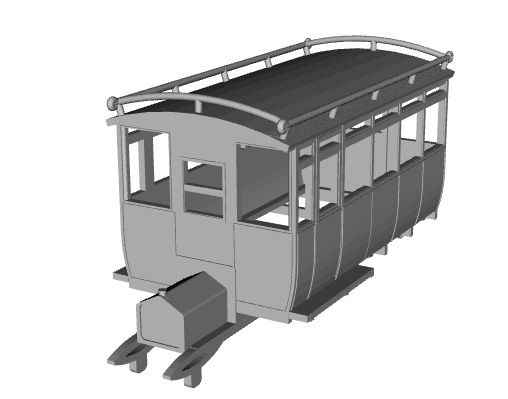
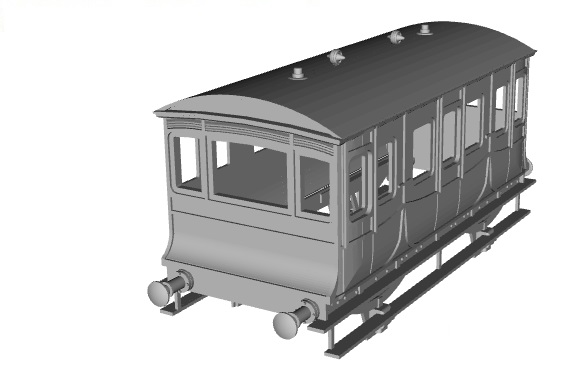
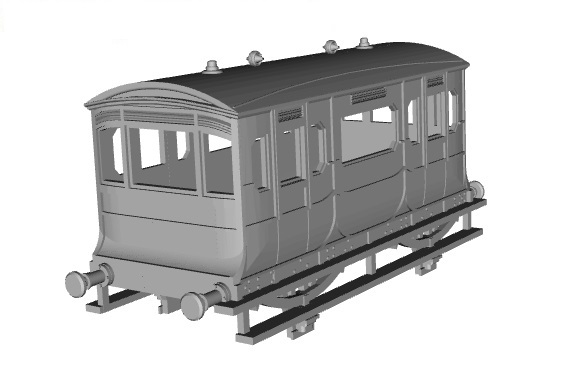
Pictures are just for reference, not of specific scaled model. 

---------------------------------------------------------

All 3D printed designs by Simon Dawson (Rue d'Étropal) , currently produced to order by Shapeways. Just follow links to Shapeways pages.


===============================

Link to:

          3D printed standard gauge locomotives

          3D printed standard gauge rolling stock

              3D printed standard gauge railcars-ex SR

              3D printed standard gauge railcars - ex GWR

              3D printed standard gauge railcars - ex LMS

              3D printed standard gauge railcars - ex LNER

             3D printed standard gauge railcars - BR


        3D printed narrow gauge locomotives

            3D printed narrow gauge rolling stock

        3D printed track and accessories

        3D printed road vehicles

        3D printed modular buildings


>>>>>>>>>>>>>>>>>>>>>> back to 3D Printing Menu


======================================

Direct links to lists for each scale below

locomotives rolling stock
     

====================================================

Currently adding links to all my designs, all other designs please go to my Shapeways e-shop.